


If you’ve been watching CNN’s coverage of the war in Iran long enough, you’ll quickly notice a pattern.
On March 2, CNN ran a segment on the latest from Iran with the line that “the big wave is yet to come.” They ran it continuously as breaking news. The focus wasn’t on what happened but the escalation coming imminently.
Later on that day, Anderson Cooper opened a special edition with rapid fire montage of missile strikes and explosions, all before any talk of what the operation’s objectives were.
The following morning, CNN’s morning coverage introduced the conflict “day four of the war with Iran.”
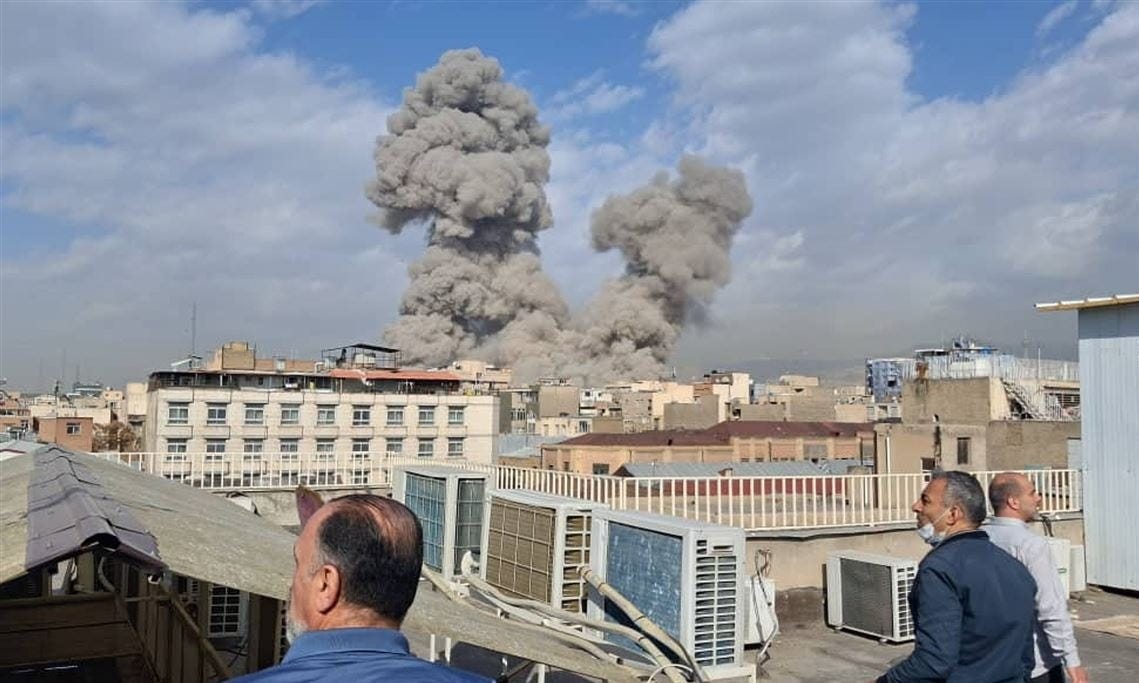
That framing matters. It shows that CNN has adopted the war’s internal clock as an organizing structure of its coverage. The story becomes the war’s momentum. What comes next? How does the escalation unfold? How intense will the next phase be?
This isn’t the same thing as covering the war’s progress. These are different editorial choices.
One of the voices on CNN explaining the war to viewers has been retired Admiral James Stavridis.
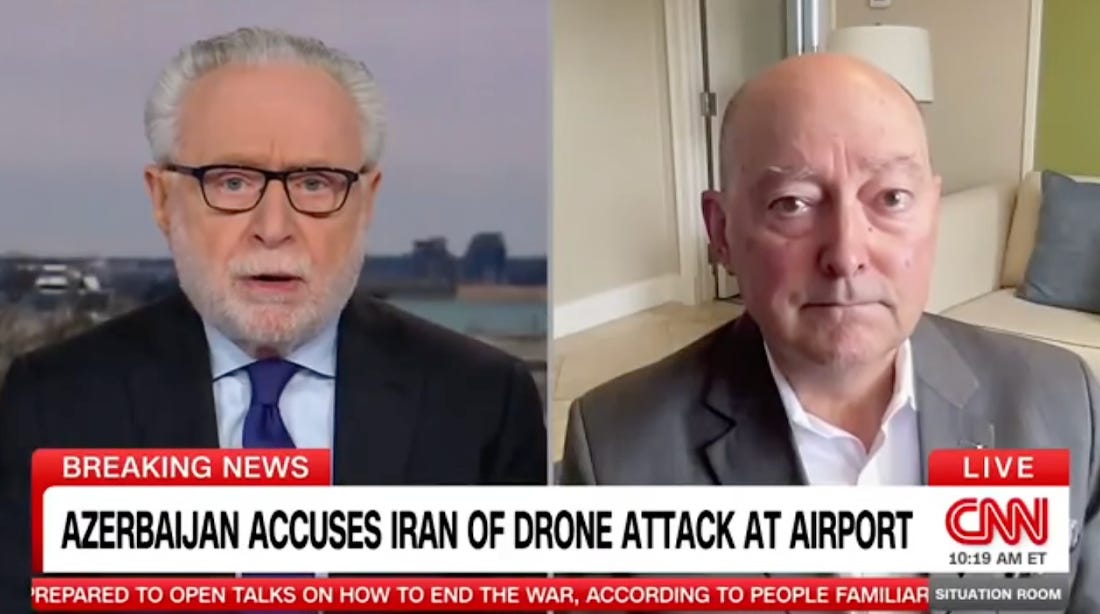
He appeared on CNN three times within eight days: February 25, March 1 and March 5. The retired admiral analyzed new developments in the conflict. Each TV appearance introduced him as an executive at the Carlyle Group.
Carlyle owns ManTech, a US defense contractor whose work mainly includes military and intel services.
CNN discloses Stavridis’ role at Carlyle but viewers are not told about the deeper web of financial connections.
And this isn’t unusual. Retired generals are widely used as analysts on TV. Their credentials are real and their access to military thinking and sources are legitimately valuable.
Their financial relationships with defense contractors are also public information and appear in corporate disclosures. But on TV, these connections never get mentioned.
Looking back, the cleanest example of how this coverage works came on a March 4th segment.
Former CNN correspondent Reza Sayah (in Tehran) was back on the network reporting on the site of a strike on an elementary school. He said the building was obliterated. He described children being pulled from the rubble.
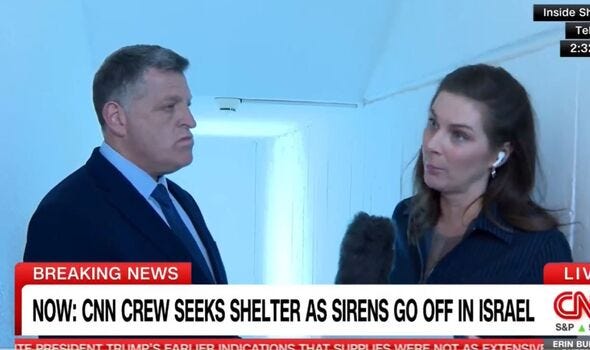
They then cut to anchor Erin Burnett interviewing Ophir Falk, Benjamin Netanyahu’s foreign policy advisor. Burnett asked him about the strike.
Falk responded with certainty, claiming that the school was struck by an Iranian missile misfire. Burnett pushed back once, noting that the US military hadn’t claimed that and that early findings revealed that American forces were operating in that area.
Then the segment ended. The claim that Iran had bombed its own school went out to millions of viewers.
The next day, the New York Times published a deep, visual investigation into the strike. They used geolocated video, satellite imagery and verified photos from the scene and concluded that the school was hit at the same time as nearby buildings housing an IRGC naval facility.
The Times looked into the misfire theory and experts said the pattern of damage was inconsistent with a single errant missile.
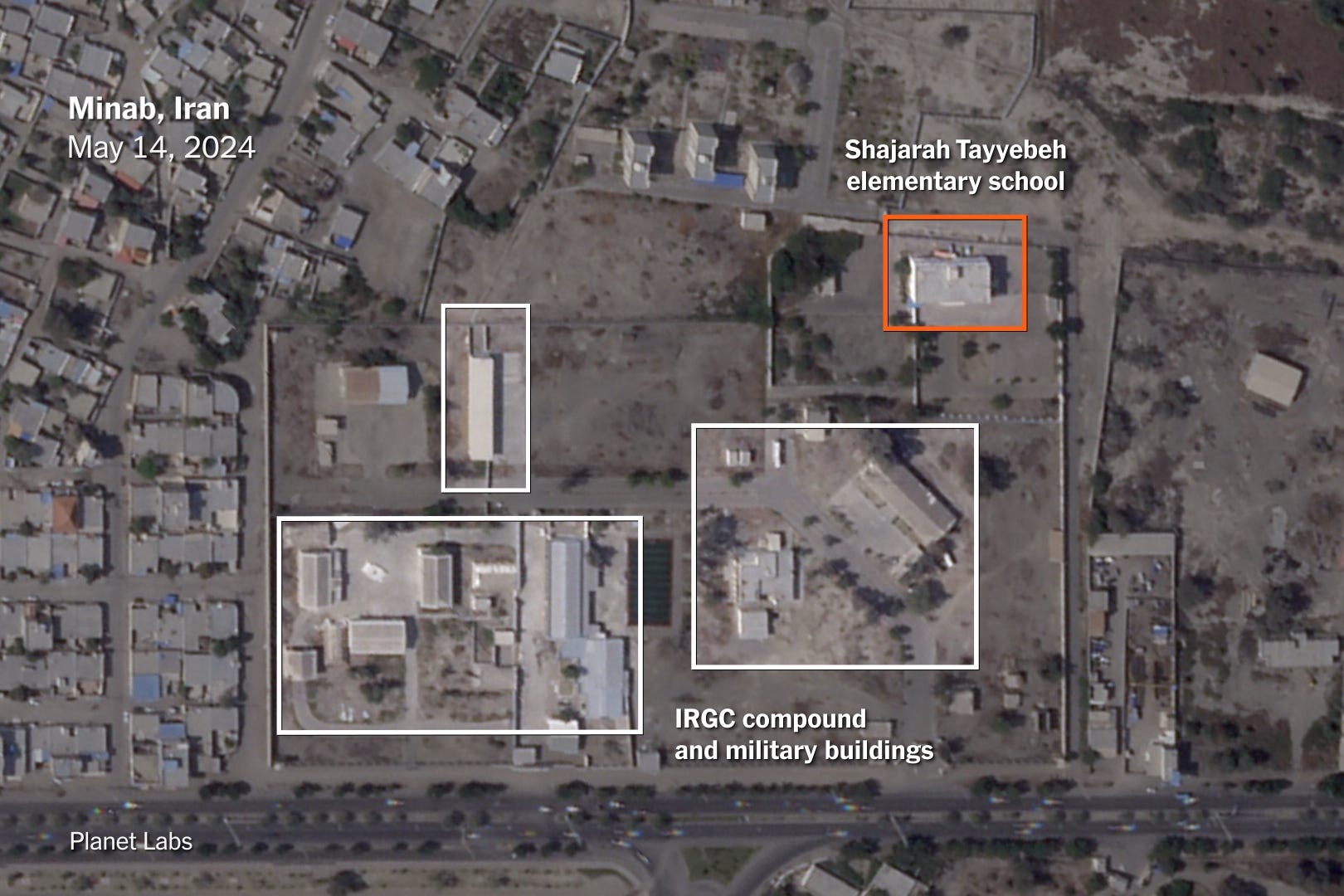
An Israeli official made an unverified claim during breaking coverage. Erin Burnett briefly noted counter-evidence. The show moved on.
Just a day later, one of the top investigative teams in journalism assembled satellite imagery and expert analysis that pointed in the opposite direction.
I haven’t seen one segment revisiting it. There’s no malice. This is simply how the coverage works.
The segment is part of a broader pattern. Across CNN’s coverage, the dominant framing of the war is operational: what was hit? What missile is coming next?
These questions are fair during a war. But other questions appear far less often… and they have answers.
In one segment, University of Chicago professor Robert Pape offered a very different warning. After studying more than 100 years of air campaigns, he said the US may be entering an “escalation trap.”
He said that attempting to bomb regimes into submission has “never worked in 100 years.”
The US, he said, may now be going “up against the weight of history.”
At what cost?
Pentagon officials have estimated that the war is burning through roughly $1 billion a day. That number rarely gets on CNN (or Fox News or MS Now for that matter). The escalation ladder does.
What does winning actually require?
When the strike on the elementary school emerged, it was the New York Times, not CNN, that did the painstaking work analyzing satellite images to understand what actually happened.
Reporting like this requires time and investment in specialized staff and resources. Live TV is running on a different clock and incentive structure.
The result is the escalation ladder that is their war story’s spine. Accountability will arrive later, if at all.
There’s another gap in the coverage. The same people asked to analyze the war on TV are the same types: retired generals, ex-administration officials, etc. The people fighting the war are somewhere else.
The 103rd Airlift Wing is based in East Granby, CT. The state has roughly 8,000 National Guard members.
They’re not career military. When they deploy their lives do not pause.
The escalation calendar will keep turning. There will be new strikes, new briefings, new analysts explaining what the new phase might look like.
The investigation into the school is still unfolding.
The 103rd Airlift Wing is still based at East Granby. They’ll report to duty when called. And CNN will cover the next phase.
Excellent Kevin. We need independent journalism to save our country.
Keep at Kevin. We need transparency.