


Ken Burns’ The American Revolution premiered this week. It’s awesome, as expected. It hasn’t finished airing yet but it’s a masterpiece that will live on way beyond us.
The film brings to life a character named Israel Putnam. He was a colony-wide famous general, a colorful character — picture Bill Murray playing him in the movie.
I’d heard his story before but it landed differently this time. Maybe because I realized I could walk outside right now, walk across the street and be at the spot of this story within a few minutes
Putnam was eating breakfast at a tavern in town when the Brits showed up. He jumped on his horse, ripped through town and looked behind.
The Brits were getting closer, the odds of him getting away were plummeting by the second. There was cavalry behind and a cliff ahead of him.
The military playbook of the 1700s would’ve told him to surrender or hide. Putnam directed his horse towards the cliff and went down.
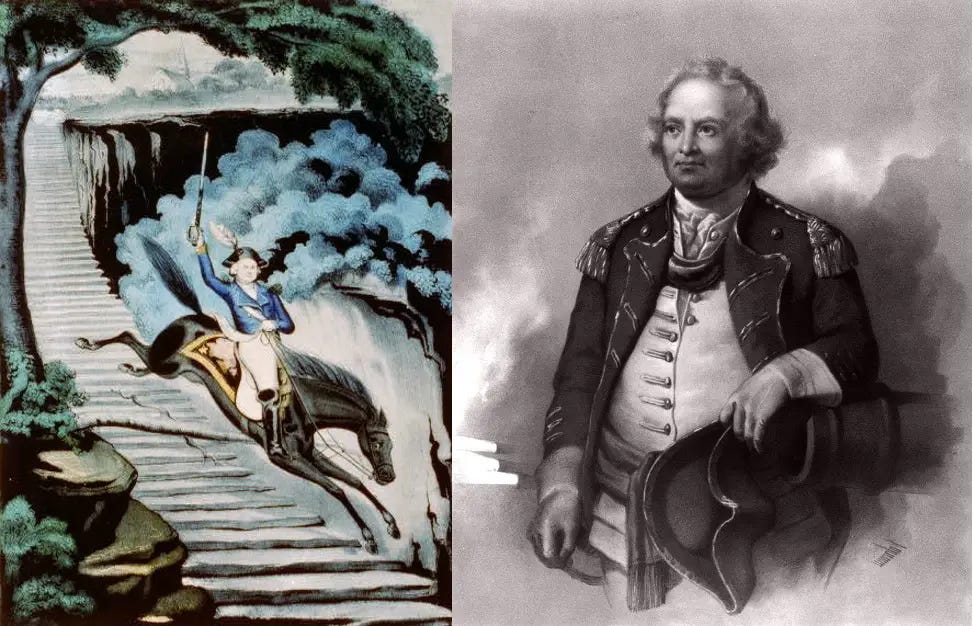
When you see that hill today, you’d know this was a death wish. The Brits got there, looked down and said, “no way.” Putnam and his horse zigzagged down the “unrideable” hill. They hit the bottom, kept riding and got away.
I’ve been thinking about this moment a lot this week. It’s the decision that sticks with me. The point where instinct kicks in and beats the “system” that’s “supposed to win.”
Because where we live now: inside the feeds, the recommendation engines, a world with everything automated, has the same quality the Brits chasing Putnam had on the top of the hill.
They were overconfident, fast and powerful. They didn’t know what to do when they got surprised.
The algos respond to what’s safe and optimized. They like predictability. They flatten the essence of the best stuff into patterns and trends they can digest.
The feeds across platforms are getting more similar. The incentives are drifting away from true authenticity.
A system that keeps building upon itself and interconnecting itself becomes slower than the people inside of it. We all see it when all of the platforms push the same recycled clip.
The conversation around breaking up Big Tech weirdly reminds me of Putnam on that hill. In this story, the British on the ridge are the platforms: huge, rigid and unable to adapt.
Everyone knows that the path we’re on is dangerous. But the idea of forcing the monopolies to change feels like pointing your horse down that unrideable hill. It’s the type of move that doesn’t make sense to the people guarding the status quo.
They’ll look down at the hill and wait for others to jump first.
History doesn’t advance because a committee or think tank says it’s ready. It moves because real people stand up and reject the logic of a system that doesn’t make sense anymore.
I drove by Putnam Hill yesterday and slowed down to get a view with my own eyes. It’s tucked up on the side of the road now, across from a church with thousands of cars driving by daily like nothing ever happened there before.
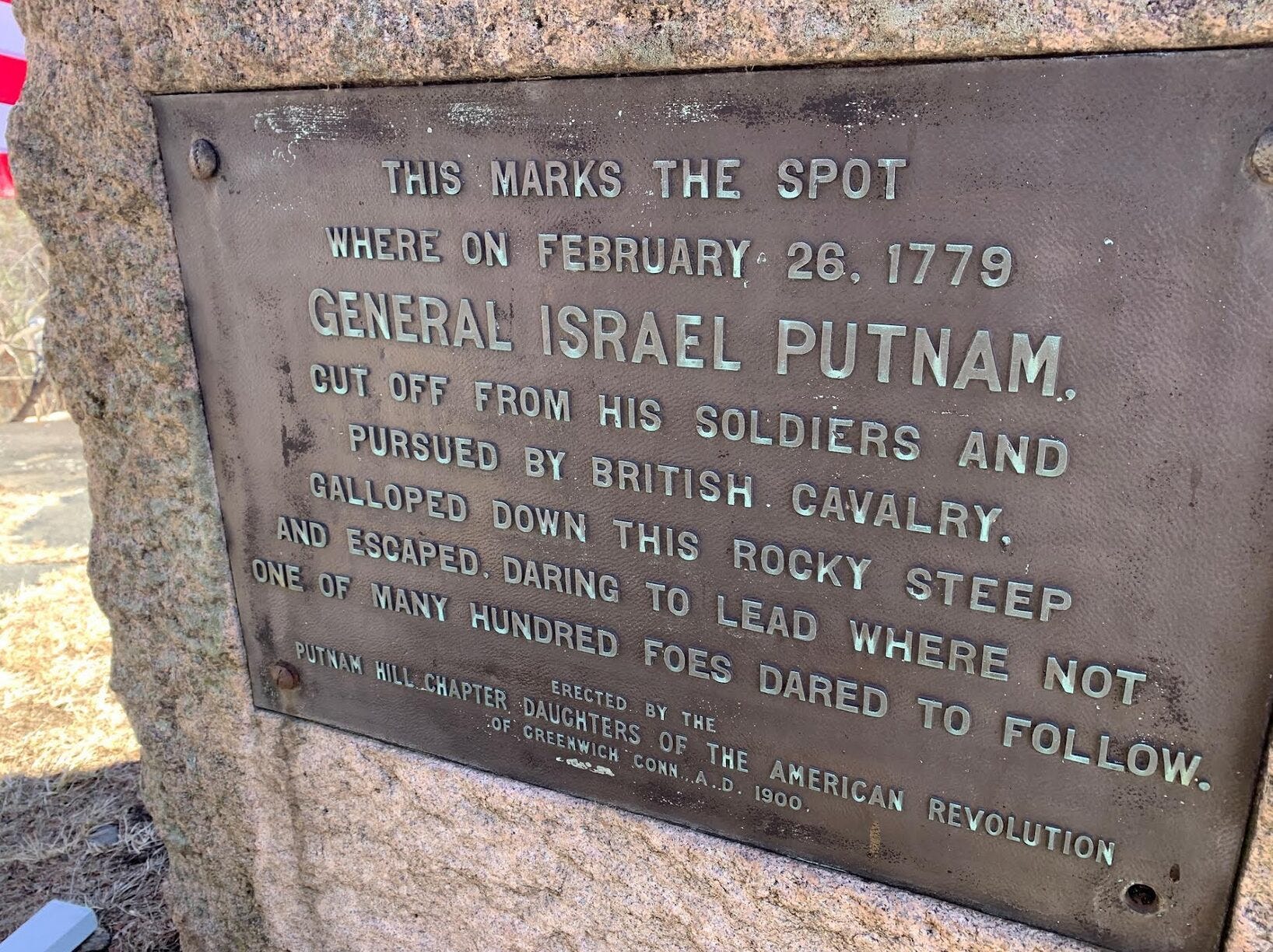
It’s a reminder that the wild, most unlikely to succeed decisions, the ones that scare everyone else, usually don’t come from legends or myths.
They come from people who simply look around, realize the rules don’t make sense anymore and ride anyway.
I’m here for all the Ken Burns story parallels 👌
At our core humans desire freedom and independence. General Putnam along with so many ordinary people did unthinkable things for the sake of freedom. This series is the history lesson we all need right now as Trump continues his attempts to unravel our Republic. We must resist.