


A decade ago, this would’ve been a joke.
A sports media commentator running for president. President of the United States of America. You’d see the pitch, laugh out loud and move on.
But Robert Costa of CBS News isn’t laughing. He covered Trump’s political rise closer than anyone in the pre-2016 years. He just spent time with Stephen A. Smith and tweeted this:
“Stephen A. Smith is moving closer to a 2028 campaign... spending a few days with him in recent months reminded me of spending a few days with Trump back in 2013-2014. Many laughed at the prospect of a bid. But in an age of celebrity and social media...”
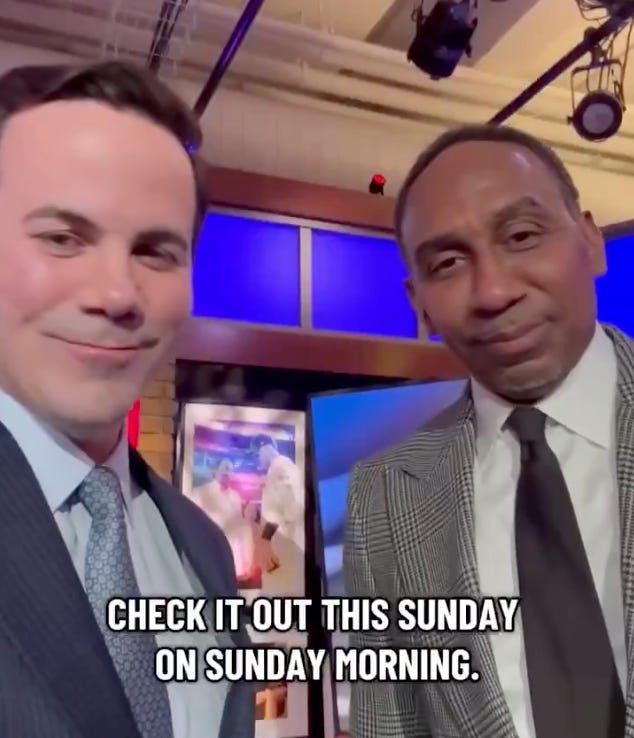
This comp isn’t nothing. Costa was there when Trump was flirting with running in early 2010’s. He saw the media dismiss it, the political pundits ignore it and the public gradually realize it was real. Costa has seen this movie before.
Smith told Costa he’s giving serious thought to running in the 2028 Democratic primary for president. He’s eager to get on that debate stage.
He wants to take 2026 to study up and learn the issues. Then he’ll make the decision. He’s fiscally conservative and socially liberal.
He’s not announcing today, but this is very real.
The early responses have been predictable. The political class is already dismissing him.
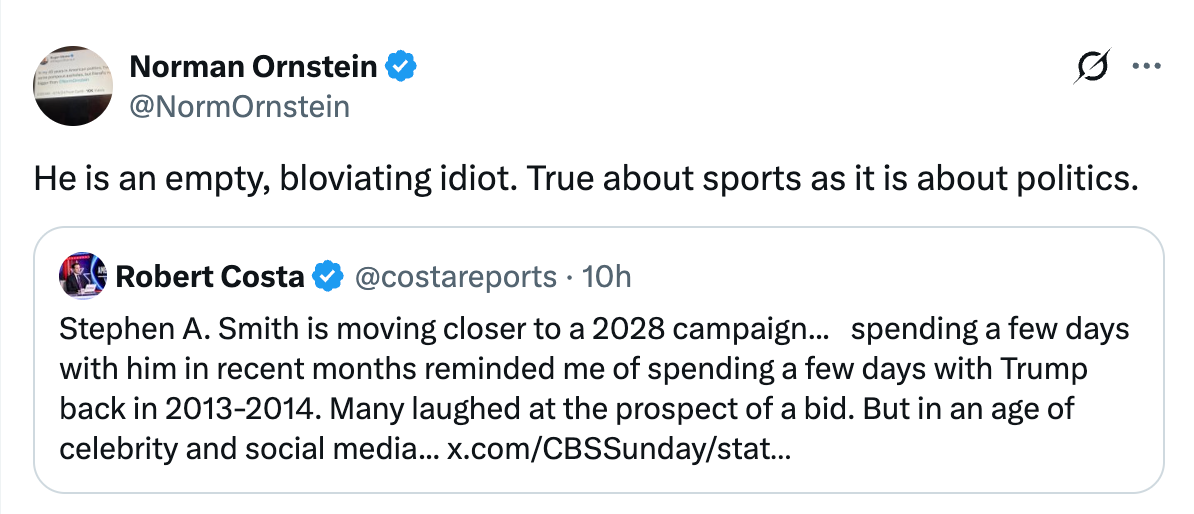
We can skip the part where we debate if this is “serious.”
Every presidential cycle, the political class sets the board and decides who gets to play. You need credentials, money, policy papers and more. Then in 2016, a loudmouth reality TV personality blew the gate open on the GOP side.
Trump had no government experience and no policy depth. But he had something else. Something more essential: an audience that already trusted him. People felt like they knew him.
The Democratic Party’s gates have held longer. Superdelegates, institutional endorsements and a media ecosystem that “both sides” everything and polices “seriousness.” But now the party is facing the kind of uncertainty that leaves an opening.
A traditional candidate enters a political race and then tries to build an audience. Stephen A. Smith already has one.
I believe moderates that feel politically homeless inside the Democratic coalition, but could never stomach moving to the GOP would flock to Stephen A. Smith. He has younger males that consume politics through sports, personality and short form video on social. They’ve been watching him since middle school.
And Stephen A. Smith has something no other candidate in the field will be able to match: two decades as one of the most visible Black media figures in the country, walking into a primary where Black voters are arguably the most decisive bloc.
They powered Obama to 95% support in 2008. There’s no President Joe Biden without Black voters in 2020. When South Carolina votes, Stephen A. Smith won’t need someone to introduce him. He’s been in the room.
15 million social followers, millions of daily television viewers, appearances across media from right, center and left. Stephen A. Smith doesn’t need to build distribution. He has it. That’s the part the political class and the pundits will underestimate.
Here’s what this really is.
I’ve written before about how the algorithm is silently running everything. How Pat McAfee isn’t the power at ESPN, he’s the product. The attention economy has rewired the incentives so that emotional velocity decides what gets distributed and seen.
Stephen A. Smith is the logical end of that process.
The presidency, for better or worse, isn’t just a policy job anymore. It’s a content and communications job. It rewards daily narrative control, the ability to leverage conflict and emotional clarity. It punishes nuance. It punishes boring.
The skills that win a presidential campaign today are the same skills that built Stephen A. Smith’s career: holding attention, generating viral clips and making people feel something on demand.
The political class will dismiss him. They’ll say he has no clue about the issues, he needs more time to study up. But the old barriers to entry are gone, Trump changed everything. What matters now is being the most compelling person on the stage. Making the audience feel like you are the only one who’s not full of it.
Smith understands this at a molecular level. He’s been on the front lines of how our culture has changed over the last two decades. He inherently knows what drives attention and conversation. He knows how to persuade not only on television, but on short form videos that go viral on social media.
He’s lived this world for 20 years, in a system that punishes the forgettable and rewards the heat.
It’s ironic that Jemele Hill got suspended from ESPN in 2017 for sharing political opinions. ESPN drew a hard line. “Stick to sports.”
8 years later, ESPN’s top personality is openly flirting with a presidential run.
There is no line between sports, media and politics anymore. Trump called into the Pat McAfee Show on ESPN and talked politics on air (and lied). Nothing happened, everyone moved on.
In the old system, you got punished for crossing lanes. In the new system, you get rewarded for it.
Robert Costa’s comp of Stephen A. Smith to Trump in 2013-14 sticks with me. A famous person with a massive platform starts leaning into politics. Costa had a front row seat for the beginning of that story. He then watched everyone dismiss it. And now… he’s saying this feels the same.
There’s a deeper pattern underneath that nobody in politics wants to name or may not understand.
Trump inherently understood how modern attention works. Stephen A. Smith understands audience development and mechanics the way most members of Congress understand fundraising.
Most of the 2028 Democratic presidential candidates will understand that attention matters. They just won’t know how to create it. Most of them don’t have the levers to pull. Stephen A. Smith has been doing it every day for twenty years.
The system that would’ve stopped this 10 years ago doesn’t exist anymore. Maybe this isn’t a bad thing.
Maybe the Democratic Party needs someone who actually understands how people talk and consume information in 2026. A guy who doesn’t need consultants to coach him for interviews.
I think he can win.
The algorithm doesn’t care about your résumé or endorsements. It only cares about whether you can hold attention.
And holding attention is the one skill Stephen A. Smith has mastered over his entire career.