


The WSJ came to Greenwich, Connecticut this week. Annie Linskey, their White House reporter, grew up in town and came home with a camera crew to ask what the town’s people were thinking about the midterms.
She spoke with a former Goldman Sachs partner, a Quinnipiac professor, former GOP gubernatorial candidate Tom Foley and State Representative Steve Meskers. But the best part belongs to First Selectman Fred Camillo.
Linskey asked Fred how he handles opponents who tie him to Trump and he didn’t dodge it. “If you voted for him, you have to say you voted for him,” he said. He told Linskey that he voted for Trump three times.
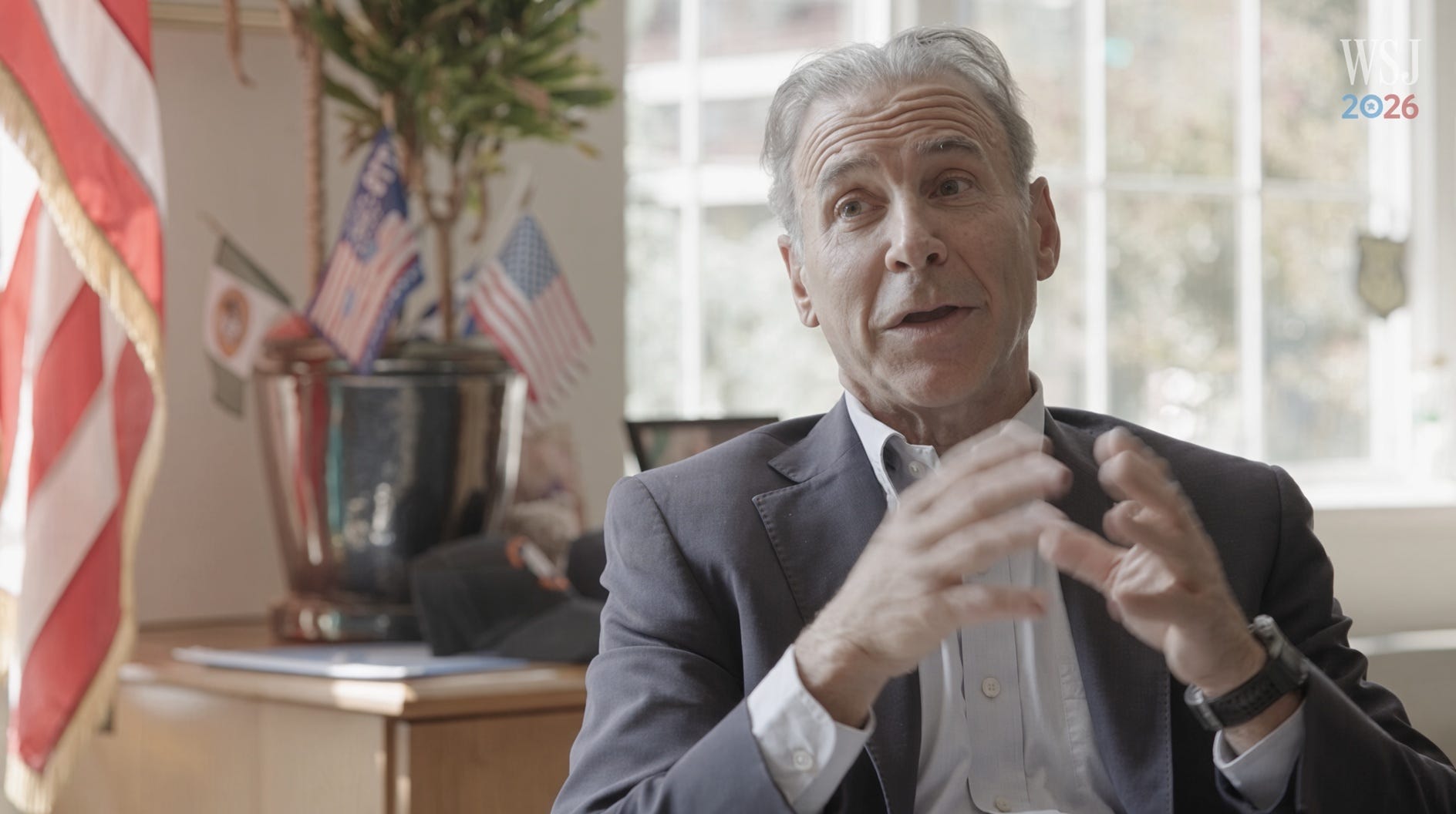
Then he went on about what the national trend does to a local margin. He said you can win by a record margin one year and then watch it shrink the next.
And Fred would know. He’s won 4 races for first selectman and he’s the most popular Republican in town. But his margins are all over the place: about 15 points in 2019, 34 in 2021 and 19 in 2023. Last November, he beat Democrat Anthony Moor by 12.6 points, the closest race of the four. And on that night, Greenwich Democrats took control of the Board of Estimate and Taxation and Rachel Khanna won her selectman seat with 9,001 votes, just 108 behind Republican Lauren Rabin.
The registration numbers are really interesting. In October 2002, Greenwich had nearly 16K Republicans and 7K Democrats. As of October 2025, it’s 13,664 Democrats and 13,126 Republicans and 19K unaffiliated voters are the town’s biggest bloc. A 2-to-1 GOP town is now a coin flip.
Steve Meskers, who in 2018 became the first Democrat Greenwich sent to the state House since 1912 told Linskey his worry is whether the political center holds. Most of the people she interviewed said the same thing.
Count me in this camp.
Ryan Fazio, another Greenwich Republican, is on the ballot for governor on November 3. He’s also said he voted for Trump, after years of being coy. Fred told the WSJ how he thinks about that vote. Greenwich will weigh in on Fazio’s support for Trump in 2 weeks.