


Eversource wants to raise your rates. That’s the part you saw in the news. What you may not have seen is what the increase covers, how it works and what goes into a monthly bill.
On May 20, Eversource told state regulators that it wants around $503M more a year from electric customers in Connecticut. 11% on an average bill and 13% on a typical household. The full application will come in a few weeks and PURA then has nearly a year to make a decision.
I wrote last week about the other number, the nearly $15M Eversource reported for its CEO pay in the latest proxy. This, as it asks customers to pay more. The company is short on trust when it needs it the most.
Your bill is really two bills stapled together. Supply (the electricity itself) is priced by the market. Delivery is what we pay to move it from point A to point B. It includes distribution, transmission, public benefits and more. This case hits just one of these: distribution, which is the poles, wires and crews that Eversource owns and operates.
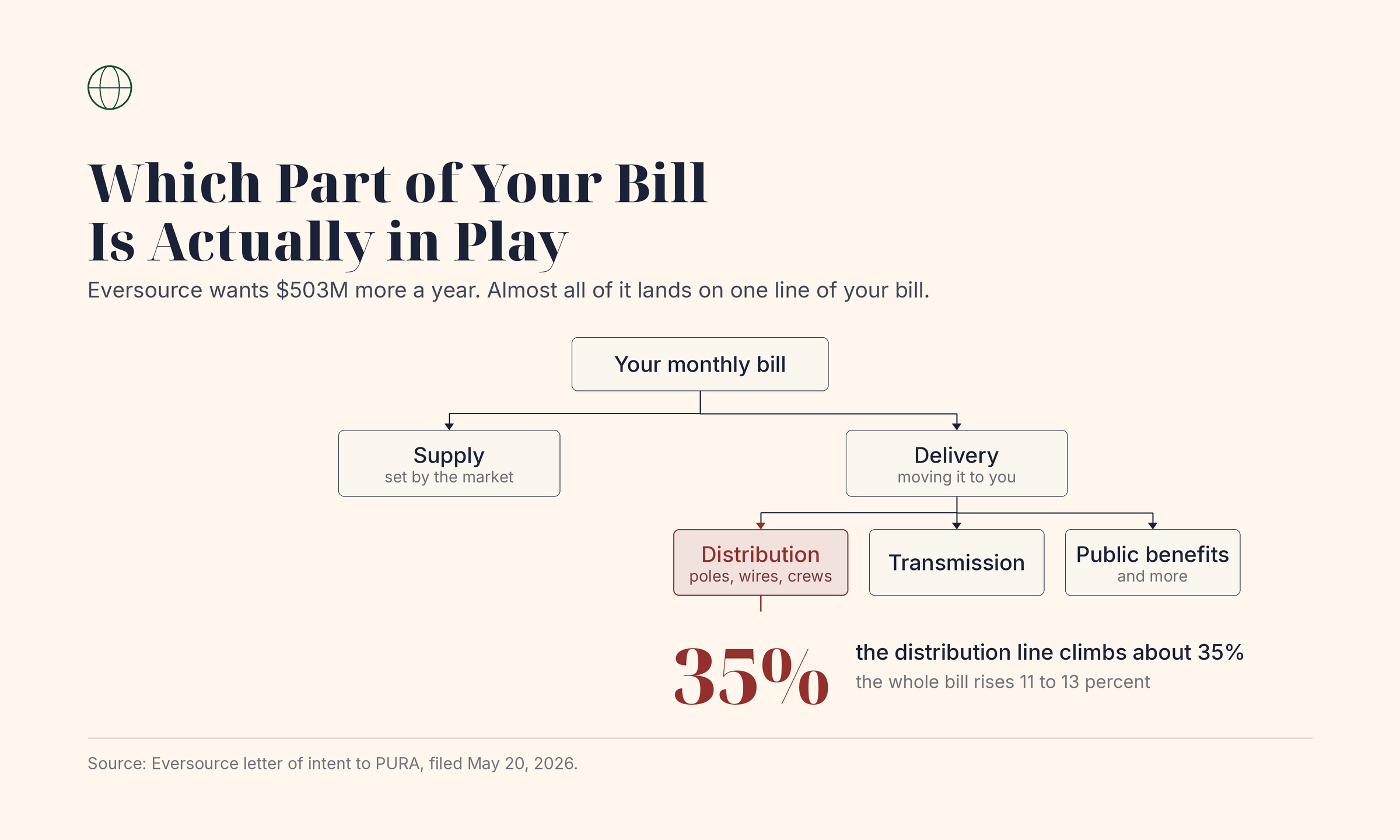
Here’s what it looks like on a real bill. My bill ran north of $500 for multiple months last winter. Put 13% more on that and it runs me around $65 more a month. Yours will be different. Take 13% of your annual total and you get a rough estimate. A percentage hits a big bill harder than a small one and Connecticut bills run high in the winter.
Eversource’s best argument should be mentioned too. It hasn’t had a full rate review since 2018. It says it’s invested over $3.3B into the grid since then and hasn’t recovered around $600M of it. The costs are real, too: labor, equipment, storms, grid work.
But how much of it belongs on our bills, and whether the company has earned the benefit of the doubt, are different questions.
In 2024, Eversource said it would cut around $500M in Connecticut investment because it disagreed with the regulator’s (PURA) rulings. And now it wants customers to fund grid investment.
A company that threatened to pull back spending after losing fights with regulators shouldn’t be shocked when people have questions after the $503M ask. It’s what you’d ask of anyone who wanted that much money from you.
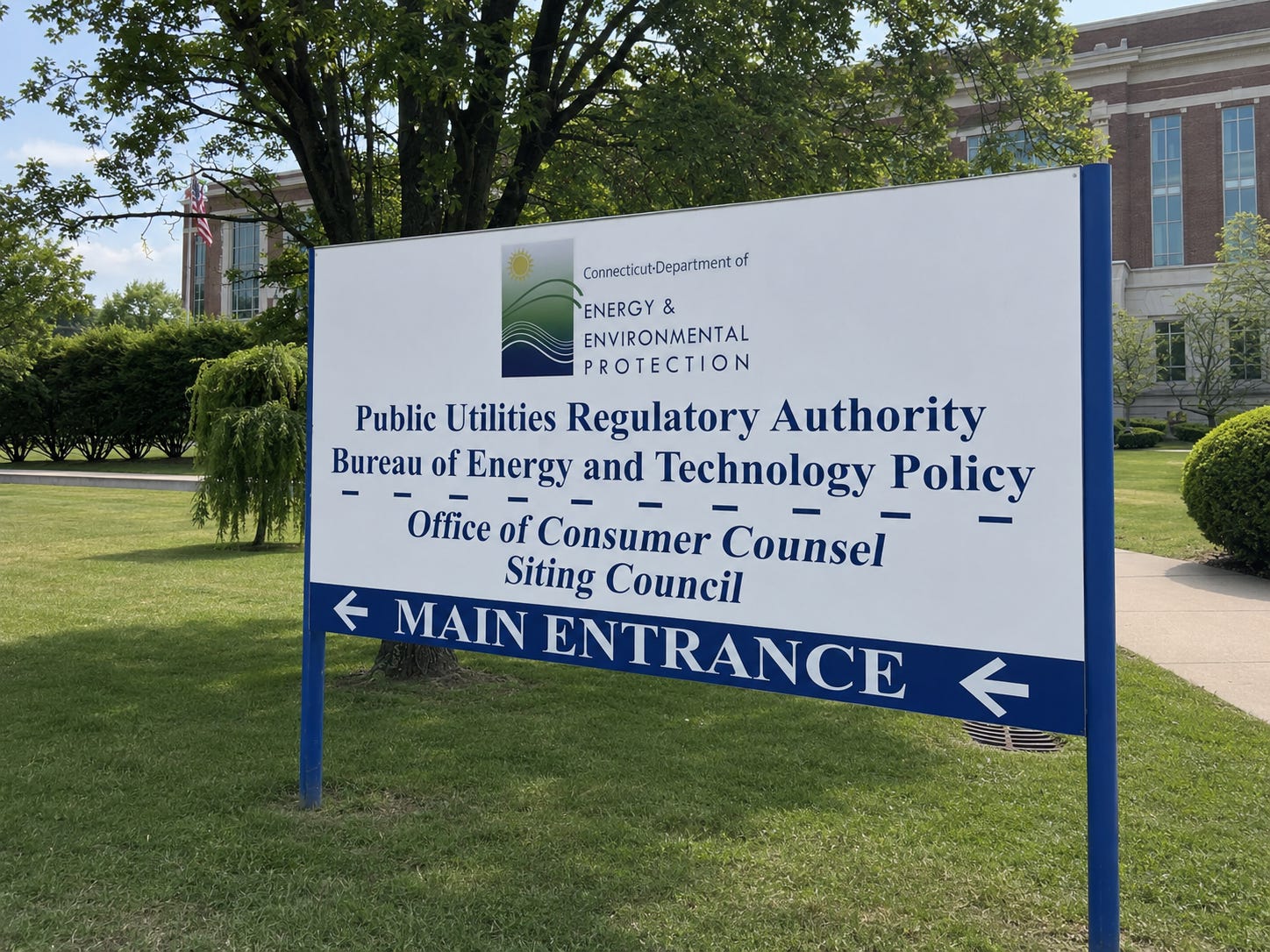
Here’s the thing press releases miss. This is Eversource’s first rate case in 8 years and it lands in front of a board that looks nothing like the one Eversource fought for years. Marissa Gillett chaired PURA starting in 2019 and built a record of cutting rate hikes. Eversource and Avangrid sued her, and she resigned last October.
Since the new regulators took over, PURA has already approved a $65.9M increase for United Illuminating, the state’s other utility, over the objections of the Attorney General and Consumer Counsel. AG Tong says Eversource waited until it "ran their chief regulator out of town" before asking.
Nobody knows how PURA handles a $503M case, but the early returns favor the companies.
I’ll watch this one closely and come back with what actually matters: what Eversource is really asking for, what PURA makes of it and who pays if Eversource gets what it wants.
The full application is due mid-July. Until then, $503M is just the opening salvo.